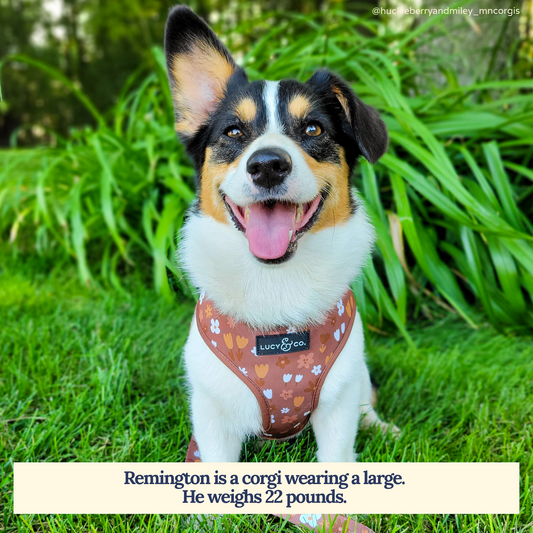
Boom-Proofing Your Pup: A Real Guide to Fireworks Season Let's be honest — fireworks are basically the fashion equivalent of showing up uninvited, way too loud, and completely unaware of the room. Gorgeous to look at, terrifying if you're a dog with way more sensitive ears and no idea what's happening. It's estimated that a large share of dogs show some sign of noise-related fear, and fireworks are consistently one of the biggest triggers — right up there with thunderstorms. The booming isn't just loud to them, it's unpredictable, which is exactly the combination that makes a dog's nervous system go into overdrive. The good news: with a little planning (most of it before the sky lights up), you can make this season a whole lot less ruff on your dog. Here's the fully updated, slightly more extra version of our fireworks survival guide. Start prepping before the big day The single best thing you can do isn't something you do during fireworks — it's what you do in the weeks before. If your dog has a history of noise anxiety, look into desensitization and counter-conditioning: playing recordings of fireworks at a low volume and pairing them with treats or play, then gradually increasing the volume over several sessions. It sounds simple because it is — it just takes time, so starting a few weeks out (not the afternoon of) makes a real difference. Double-check the ID situation More dogs go missing around fireworks holidays than almost any other time of year — startled dogs bolt, and bolting dogs don't exactly stop to check street signs. Before the festivities start, confirm your dog's microchip info is current and that their collar tag has an up-to-date phone number. And since a scared dog can be a surprisingly strong little Houdini, now's a good moment to double check that your dog's collar or harness actually fits snugly and securely — nothing worse than a good escape artist backing right out of a loose collar mid-panic. Tire them out first A long walk, a solid play session, or a good sniff-around adventure earlier in the day can take the edge off. A dog who's already a little tired has an easier time settling down when the noise starts, compared to one who's wound up and full of pent-up energy. Keep them indoors, and set the scene early Bring your dog inside well before fireworks are expected to start — don't wait until you hear the first boom. Close windows and curtains to muffle sound and block the flashing light, and turn on a fan, TV, or white noise machine to help cover the noise from outside. Create a safe space Set up a cozy, den-like retreat — a covered crate, a quiet room, or just their favorite corner with their bed and a well-loved toy — where they can hide out if things feel like too much. Some dogs find comfort in small, enclosed spaces during storms and fireworks, so don't be surprised if they burrow. Let them choose the spot; don't force them into one they're not into. Offer distraction, not just noise-canceling A long-lasting chew, a frozen stuffed treat toy, or a new puzzle feeder can go a long way toward shifting your dog's focus from "what was that?!" to "wait, how do I get the peanut butter out of this thing?" Keep it low-key and let them opt in. Rethink the calming extras A snug, supportive garment (think ThunderShirt-style wraps) works for a lot of dogs by applying gentle, constant pressure — similar to swaddling. Calming chews or supplements formulated specifically for dogs can also help, but always run them by your vet first. One quick but important update: skip essential oils and diffusers. Many essential oils that are perfectly fine for humans (including popular "calming" ones) are toxic to dogs even in small amounts, so they're best left off the list entirely. Stay calm yourself Dogs are shockingly good at picking up on our energy. If you're anxious and hovering, they'll clock it. Speak in a normal, relaxed tone, offer affection if they want it, and try not to make a big dramatic deal out of every boom. You don't need to ignore them, but you also don't need to throw a full comfort parade every time the sky pops. Talk to your vet ahead of time — not the day of If your dog has a history of severe fireworks anxiety (think: panting, drooling, destructive behavior, trying to escape), it's worth a vet visit before the season kicks off. Many anti-anxiety medications and situational calming aids work best when they're in your dog's system ahead of the event, not administered in a panic once the noise has already started. Your vet can help you figure out the right plan and timeline for your dog specifically. The bottom line Fireworks season doesn't have to be a nightmare for you or your dog. With some advance prep, a secure fit on their collar or harness, a solid safe space, and a calm human by their side, most dogs can get through it feeling a lot more like "this is annoying" and a lot less like "the sky is falling." And hey — a little extra snuggle time never hurt anybody, human or dog. photo by @huckleberryandmiley_mncorgis
Boom-Proofing Your Pup: A Real Guide to Fireworks Season Let's be honest — fireworks are basically the fashion equivalent of showing up uninvited, way too loud, and completely unaware of the room. Gorgeous to look at, terrifying if you're a dog with way more sensitive ears and no idea what's happening. It's estimated that a large share of dogs show some sign of noise-related fear, and fireworks are consistently one of the biggest triggers — right up there with thunderstorms. The booming isn't just loud to them, it's unpredictable, which is exactly the combination that makes a dog's nervous system go into overdrive. The good news: with a little planning (most of it before the sky lights up), you can make this season a whole lot less ruff on your dog. Here's the fully updated, slightly more extra version of our fireworks survival guide. Start prepping before the big day The single best thing you can do isn't something you do during fireworks — it's what you do in the weeks before. If your dog has a history of noise anxiety, look into desensitization and counter-conditioning: playing recordings of fireworks at a low volume and pairing them with treats or play, then gradually increasing the volume over several sessions. It sounds simple because it is — it just takes time, so starting a few weeks out (not the afternoon of) makes a real difference. Double-check the ID situation More dogs go missing around fireworks holidays than almost any other time of year — startled dogs bolt, and bolting dogs don't exactly stop to check street signs. Before the festivities start, confirm your dog's microchip info is current and that their collar tag has an up-to-date phone number. And since a scared dog can be a surprisingly strong little Houdini, now's a good moment to double check that your dog's collar or harness actually fits snugly and securely — nothing worse than a good escape artist backing right out of a loose collar mid-panic. Tire them out first A long walk, a solid play session, or a good sniff-around adventure earlier in the day can take the edge off. A dog who's already a little tired has an easier time settling down when the noise starts, compared to one who's wound up and full of pent-up energy. Keep them indoors, and set the scene early Bring your dog inside well before fireworks are expected to start — don't wait until you hear the first boom. Close windows and curtains to muffle sound and block the flashing light, and turn on a fan, TV, or white noise machine to help cover the noise from outside. Create a safe space Set up a cozy, den-like retreat — a covered crate, a quiet room, or just their favorite corner with their bed and a well-loved toy — where they can hide out if things feel like too much. Some dogs find comfort in small, enclosed spaces during storms and fireworks, so don't be surprised if they burrow. Let them choose the spot; don't force them into one they're not into. Offer distraction, not just noise-canceling A long-lasting chew, a frozen stuffed treat toy, or a new puzzle feeder can go a long way toward shifting your dog's focus from "what was that?!" to "wait, how do I get the peanut butter out of this thing?" Keep it low-key and let them opt in. Rethink the calming extras A snug, supportive garment (think ThunderShirt-style wraps) works for a lot of dogs by applying gentle, constant pressure — similar to swaddling. Calming chews or supplements formulated specifically for dogs can also help, but always run them by your vet first. One quick but important update: skip essential oils and diffusers. Many essential oils that are perfectly fine for humans (including popular "calming" ones) are toxic to dogs even in small amounts, so they're best left off the list entirely. Stay calm yourself Dogs are shockingly good at picking up on our energy. If you're anxious and hovering, they'll clock it. Speak in a normal, relaxed tone, offer affection if they want it, and try not to make a big dramatic deal out of every boom. You don't need to ignore them, but you also don't need to throw a full comfort parade every time the sky pops. Talk to your vet ahead of time — not the day of If your dog has a history of severe fireworks anxiety (think: panting, drooling, destructive behavior, trying to escape), it's worth a vet visit before the season kicks off. Many anti-anxiety medications and situational calming aids work best when they're in your dog's system ahead of the event, not administered in a panic once the noise has already started. Your vet can help you figure out the right plan and timeline for your dog specifically. The bottom line Fireworks season doesn't have to be a nightmare for you or your dog. With some advance prep, a secure fit on their collar or harness, a solid safe space, and a calm human by their side, most dogs can get through it feeling a lot more like "this is annoying" and a lot less like "the sky is falling." And hey — a little extra snuggle time never hurt anybody, human or dog. photo by @huckleberryandmiley_mncorgis